
Let me start by stating that this post is not putting down ANY forms of classroom management! I write this assuming that EVERY teacher does what works best for them and their students. We come to this profession because we want to ignite a love of learning and help children discover their potential. When you have that as your primary goal (and I know you do!), the rest is… well, the REST!
I simply want to share my perspective that has come from my years of teaching in an inclusion classroom, and my personal experiences as a struggling student (a whole different blog post- or series!)
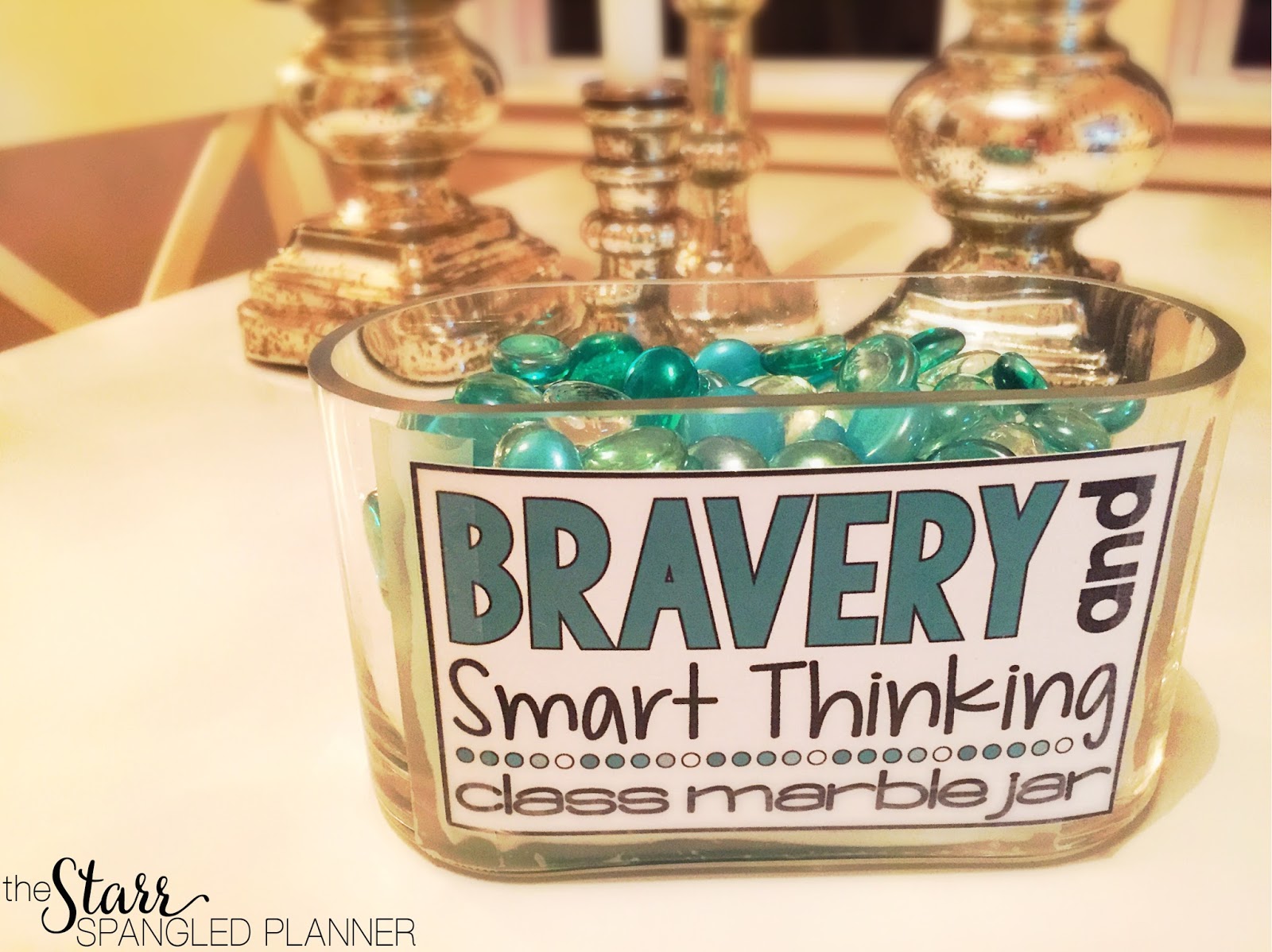
Now, let’s get to talking about this marble jar! Isn’t it pretty? My kids think so too!
Call me old fashioned, but I do not reward students for expected behavior.
- If the direction is to “Line Up Quietly,” you are expected to do it.
- If you remain focused during math centers and finish your work, that’s great! That’s what you were expected to do!
- You explained the directions to your friend who was absent yesterday? Thank you for being a kind friend. That’s what’s expected of students in this community!
That’s not to say that I don’t acknowledge their efforts and hard work! Oh no! Specific praise is a good friend of mine, and I enjoy pointing out what students are doing well. I know some behavior experts will say that’s a reward, and positive reinforcement. Yes it is, but it’s not done publicly, and does not involve anything other than those honest words. This is where I am trying to draw the distinction.
Please don’t get me wrong! I do not have a magical classroom where every child does everything right all the time! WE ARE TALKING ABOUT HUMANS, NOT ROBOTS! (and little humans no less!) Things go wrong all day, just like every classroom. It’s just that I choose to not reward my students for doing the right thing. It’s what’s expected.That doesn’t mean that I’m a bland, dreary teacher who is opposed to celebrating! On the contrary! I feel that by not celebrating when we meet expectations, we can place our focus on when students exceed expectations, and encourage them to do it often!
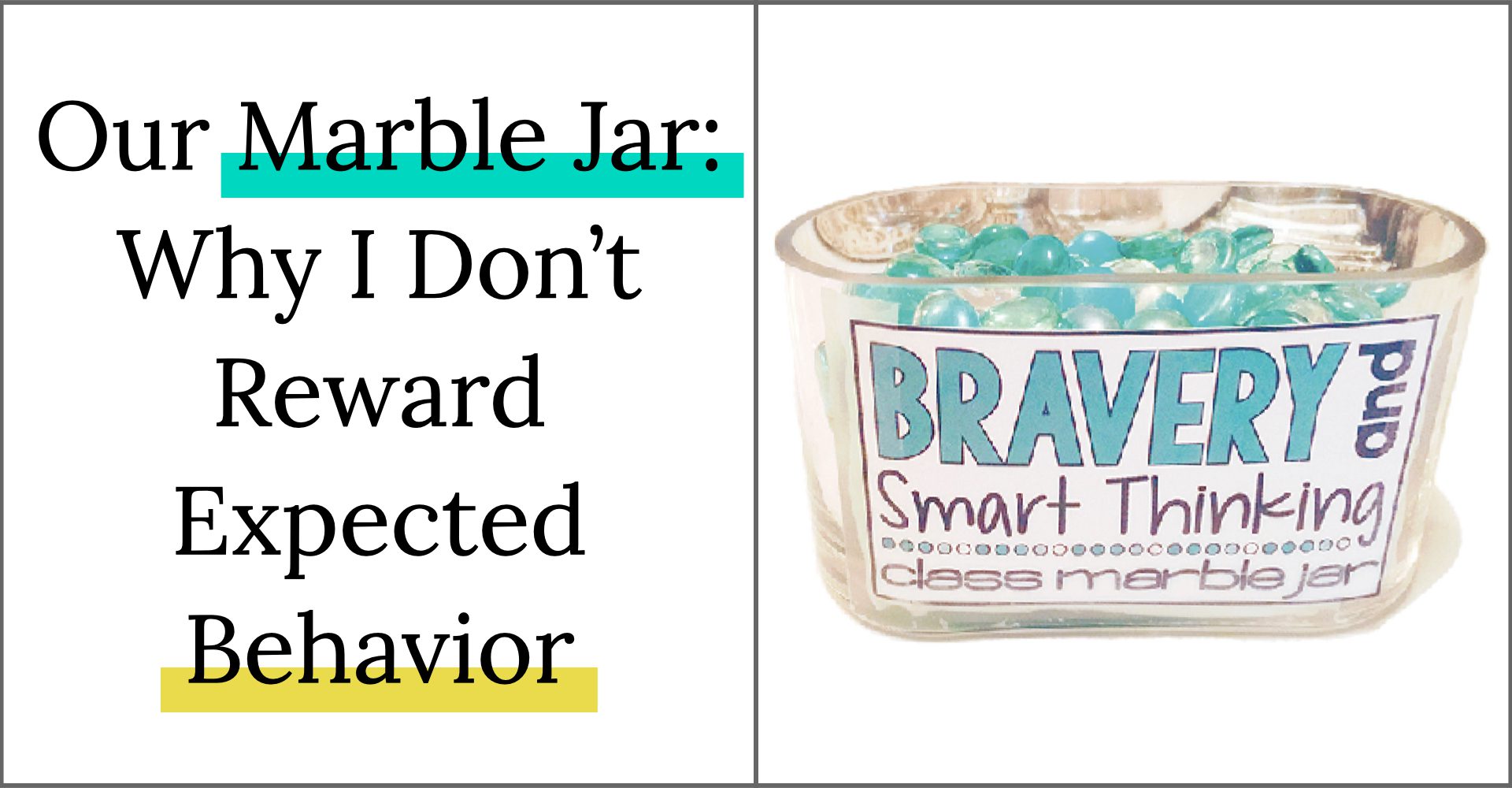
If you look closely at my marble jar label, it says “BRAVERY and SMART THINKING!”
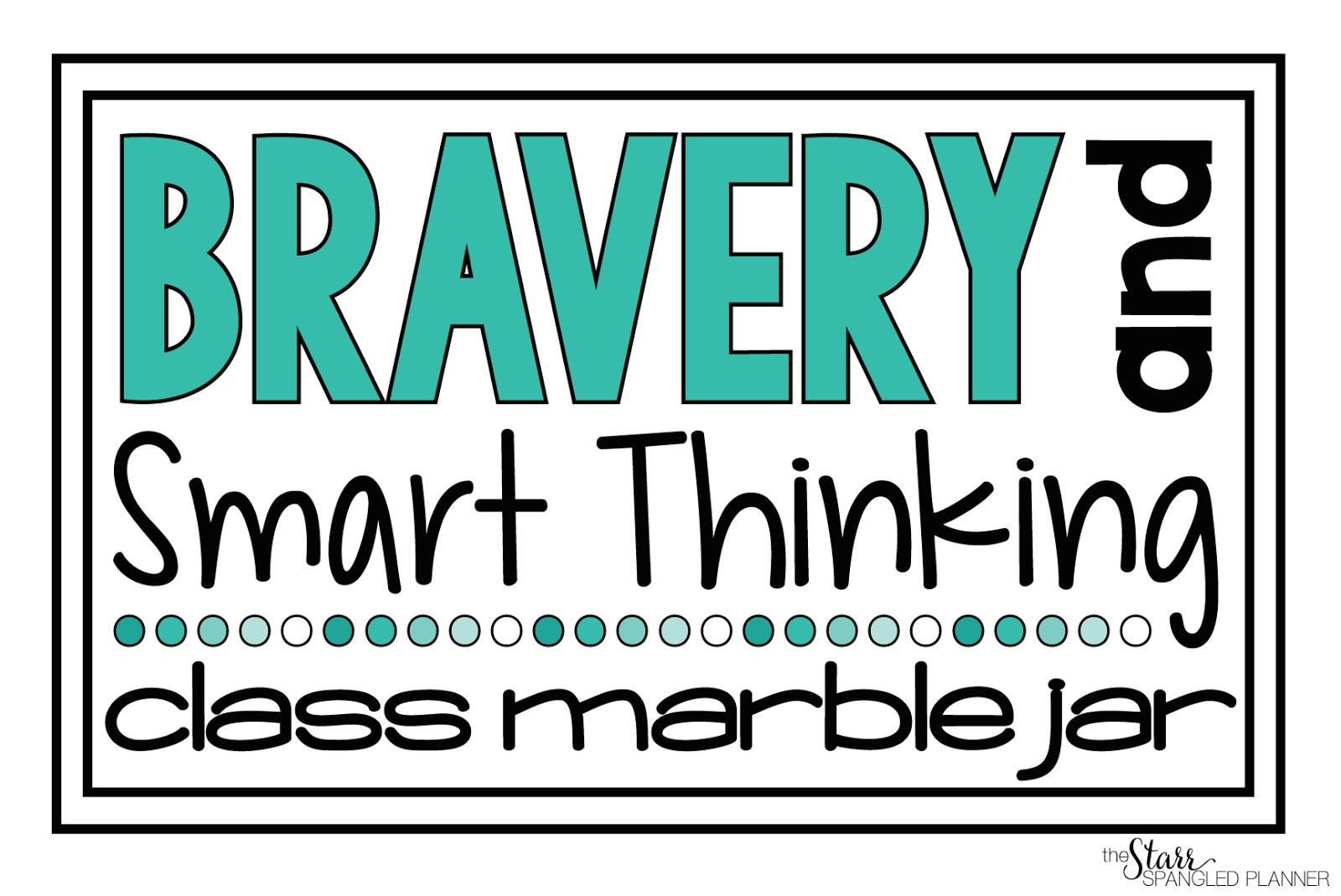
These are the two things in my classroom that will earn students an external reward (in our case, a marble in the marble jar.) You may be asking yourself, ‘Bravery and smart thinking? What does that look like in a classroom?’ My favorite part about this is that it looks different for EVERY child!
What requires bravery for one child, may not for another. Here are some examples to help you get the gist of my meaning:
- A student who rarely speaks during whole group lessons shared a lengthy account of their weekend
- A struggling reader made it through an entire reading group session without saying “I can’t”
- A student reached out and made a new friend
- A student accepted a challenge and persevered
- A student performed at a school concert even though they were “too nervous!”
- The whole class made it through state testing!
- A student makes a powerful connection between something we are learning and something they have learned previously or experienced
- A student makes an insightful comment into a social conflict
- A struggling mathematician just related addition to subtraction and was able to share their understanding with a peer
- A student noticed that another student was having a hard time not talking to their friend at the carpet, and offered to switch places with them
- A student asks a probing question during a lesson that drives the conversation and helps everyone think deeper about the topic.